Kami Wars: Conflict Begins
Shogun
11 Feb 2009
First Chapter of what is to be come an epic battle. Go to Popular Airsoft Events to learn more... "Legend has it that at the height of the war among the gods (kamis), one of the deities fled to earth, bringing with him the mystical sword of Hachiman, the god of war, convinced that by doing so it would bring peace to the heavens. The deity was wrong. The gods instead brought their war to earth with kamis descending from the heavens to get their hands on the sword.
According to the same legend, the sword of Yawata no Kami, as Hachiman is also known, would bring untold power to whoever wields it, allowing him to rule both heaven and earth. Hachiman's sword, which is said to be more powerful than the more famous Japanese sword Kusanagi, has never been found and the search for it has been the driving force behind the violent upheavals the world has seen over the centuries. To this day, kamis, taking the form of men, continue to battle each other for supremacy here on earth.

Another Asian legend that came much later, spoke of a mysterious warrior who entrusted a sacred sword to monks with instructions to keep it safe and hidden from whoever seeks it lest the world be engulfed in great turmoil. The sacred sword, it is said, not only grants enormous power to whoever is in possession of it but also virtual immortality. True to their words, the monks kept the existence of the sword secret through the centuries. As the story goes, the monks ensured that the sword remained safe by moving it from one monastery to another.

***
Hachiman's Sword became a passion for the descendants of the kamis who descended from heaven in search of it, including members of the Japanese Imperial family. It was the search for Hachiman's Sword that drove Japan to extend its reach into Machuria and Korea in the 1930s and later the rest of Southeast Asia and the Western Pacific Ocean in World War II under the guise of the Greater East Asia Co-Prosperity Sphere. This also explains the organized massive looting of Southeast Asia during the Japanese occupation where monasteries, churches and other places of worship, business establishments, museums and homes were systematically pillaged under the direction of a secret organization called the Kin no Yuri (Golden Lilly) headed by no less than Emperor Hirohito's brother, Prince Yasuhito Chichibu, ostensibly to finance Tokyo's war effort. The hoard represented the wealth of 12 Southeast Asian countries that had been accumulated over thousands of years.

The stolen loot would later be popularly known as Yamashita's Gold or Yamashita's Treasure after General Tomoyuki Yamashita, the so-called Tiger of Malaya, who assumed command of Japanese forces in the Philippines in 1944. According to various accounts, the loot was initially concentrated in Singapore, and later transported to the Philippines. The Japanese hoped to ship the treasure from the Philippines to the Japanese mainland after the war ended. However, as the war in the Pacific progressed, Allied submarines and aircraft inflicted increasingly heavy losses on Japanese merchant shipping, sinking some of the ships carrying Yamashita's treasure back to Japan.

When General Douglas MacArthur made good his promise of returning to the Philippines in 1945, the Kin no Yuri directed General Yamashita to hide the loot in caves, tunnels and underground complexes in the Philippines. It is said that the loot was hidden in as many as 172 sites in the Philippines. According to written accounts, many of those who knew the locations of the treasure were killed during the war or later tried for war crimes and executed or imprisoned. General Yamashita himself was hanged for war crimes on February 23, 1946.
There are claims that United States military intelligence operatives located much of the loot, valued at billions of dollars in gold bullion, platinum and loose diamonds; colluded with Emperor Hirohito and other senior Japanese officials to conceal its existence; and used it to finance covert intelligence operations around the world by the Central Intelligence Agency (CIA) during the Cold War and even up to this day. According to researchers, this information, if true, revealed the existence of an extraordinary state secret, something the United States Government kept from its own citizens for more than half a century.


The Kin No Yuri, with its surviving members and their heirs after World War II, was able to rejuvenate itself following Japan's reconstruction and prosperity after the War. They had silently split up from the loyalists of the Japanese Imperial Family, and the Western-backed Japanese government. With their investments in businesses during Japan's economic growth with what remained of the Yamashita treasure they got, they were able to build up wealth that is unsurpassed in East Asia and the Pacific. Their business influence reaches to many parts of the world via high-technology, and manufacturing. But their mission of finding the sword of Hachiman and bringing back Japan’s lost glory remains.
***
In 1971, Filipino treasure hunter Rogelio Roxas uncovered some of the treasure, including a three-foot Buddha made of 18-karat gold and weighing one metric ton, after a seven-month search made possible by the son of a former member of the Japanese Imperial Army who provided a map of the location of the treasure and General Yamashita's interpreter who told him of visiting an underground chamber where stores of gold and silver were kept. Unknown to others―perhaps even to General Yamashita and his troops who seized the Buddha during their plunder of Southeast Asia―the Buddha's head was removable and that it concealed a hollowed-out portion within the statue that contained at least two handfuls of uncut diamonds. Although Roxas disclosed the removable head and the diamonds, he failed to mention that the statue also contained something that would have been of great interest to the Kin no Yuri an ancient map inscribed with the characters 八 幡 神 , and a drawing of a sword with a dove on it. The characters mean Hachiman-shin and the dove is Hachiman's symbolic animal and messenger.

Soon after making his discovery, Roxas was arrested, tortured and jailed by former President Ferdinand Marcos. The Buddha and the rest of the treasure were seized except for the Hachiman map that Roxas managed to hide before he was whisked away by government agents. Roxas was released after several years but died under suspicious circumstance shortly after. Twenty years after Roxas's death, talks of Japanese treasure hidden in underground bunkers in the Philippines and nearby countries of Southeast Asia continued to percolate.

***
Elias Morales, the deep penetration agent tapped by the Interpol to break the Rosseta drug cartel, has found himself in the neighboring country of Maharlika, where he is now trafficking in weapons for nationalist rebels seeking to overthrow the Western-backed government of President Rizalino Lakandula. Morales was earlier reported to have been killed in an exchange of fire with Rosetta gunmen in sent to eliminate him after the druglords uncovered his true identity in OPERATION BOLO. His badly mangled body was later recovered by government special forces that were sent to rescue him.
As things turned out, it was Morales who actually eliminated the gunmen and realizing that his cover had been blown, decided to make a run for it by putting his clothes and other personal effects on one of the dead gunmen and passing himself off as a villager. He made it safely to Manila where he laid low for a while. With whatever funds he had running low, Morales decided to seek out one of his old friends in Manila, a big time gunrunner, who offered him a job he could not turn down. He was told to go to neighboring island-state of Maharlika, make contact with nationalist rebels and try to see if they would be interested in procuring weapons and other materiel that would hasten the downfall of the regime of President Lakandula. This was nothing new to Morales who had previously supplied weapons of death to parties from both sides of a conflict.

Morales headed off to Maharlika and within days of his arrival was able to establish contact with Timawa partisans and offered to sell them sophisticated weapons that would surely bolster the firepower of the Timawa rebel army. The Timawas, who trace their origins to a similar group that operated in the Philippines prior to the Second World War, have for quite some time been waging an ineffective guerrilla war in the Maharlika countryside against government forces trained and funded by the CIA. The Timawa objective is to overthrow Maharlika's pro-western government and replace it with what its leader, Bonifacio Miranda, described as a government that is truly representative of the hopes and aspirations not only of Maharlikans, majority of who live below the poverty line, but also of other Asian peoples whose leaders have allowed themselves to become puppets of the Western powers.


Estimates put the Timawa strength at under 2,000 armed men operating in numerous camps and bases in the dense tropical forests covering the Bayanihan mountain range north of the country's Kalantiaw Plains. The guerrillas are up against a 100,000-strong Maharlikan army supported by armor and air assets provided by the CIA. It is this army which the Timawa accuse the Lakandula Government of using to protect Western interests in mining, lumber and other industries that have been exploiting Maharlika's vast natural resources.


A few weeks after Morales's arrival, he found himself being escorted to the main Timawa rebel base in the Bayanihan mountains where he was presented to no less than Bonifacio Miranda himself. After hearing Morales’s sales pitch, Miranda's face glowed with the thought of the Timawa finally being able to turn the tide of the war against the Lakandula puppet government. Miranda excused himself and upon his returned asked Morales if he would accept gold as payment for the weapons. He then handed over what turned out to be a gold bar to Morales. Inscribed on it were what appeared to be the Japanese characters 八 幡 神 and a drawing of a sword with a dove on it. Miranda said he could only pay in gold since he could not raise enough cash to pay for the weapons he intends to buy. Without Morales asking, Miranda said he and his men stumbled upon a cache of gold and other valuables in a cave in the mountains where they sought shelter during a powerful typhoon. Miranda suspects the find was part of the fabled Yamashita Treasure that the Japanese may have stashed in Maharlika before the end of the Second World War. Morales said he would have to bring the gold bar back to the Philippines with him to determine its real value. With that the two men shook hands and Morales made his way back to the Manila.
***
In Manila, Morales had the gold bar assessed and after determining that it was genuine decided to bring it to one of the shops in Ermita that specialized in Oriental antiques. Morales wanted the inscription deciphered as it may give added value to the gold bar. The antique dealer was of no help except to say the inscription seemed to be in Japanese. It was then that the dealer sought the help of a Japanese antique collector who happened to be in the shop. The Japanese was in awe when he saw the gold bar with the inscription, which he said translated to Hachiman-shin, a major deity who is considered to be the protector of Japan. The Japanese asked where he found the gold bar and offered to purchase it at a price much more than what Morales expected it to fetch. Morales said he would think about the offer. A few days later, the antique collector, accompanied by another Japanese, met with Morales and sought his help in finding the rest of the gold, which they said has strong historical significance to them. They told Morales to name his price. When Morales told them it was the Timawas that uncovered the gold in Maharlika, the two Japanese wasted no time in convincing the arms smuggler to connect them with the Timawas.
Morales was not surprised. The two Japanese, who introduced themselves only as Yamato and Homma, had no choice but to go to the Timawas since there was no way they would be able to work with President Lakandula. Like all members of the Lakan tribe that had governed Maharlika since the end of the Second World War, President Lakandula is fiercely anti-Japanese, owing to the death and suffering the Lakans endured during the Japanese occupation of their country. The Timawas are also their logical choice as the early Timawas shared Tokyo’s vision of uniting the peoples of Asia against Western domination.
Yamato and Homma said they would like to present the Timawas with an offer they could not refuse—men and weapons to help them overthrow the Lakandula regime in exchange for the rebels' permission for them to search and recover not only gold and other artifacts hidden by retreating Japanese forces but also the remains of Japanese soldiers who perished there during the war. The two said Morales will be rewarded handsomely as the Japanese will source the weapons they would provide the Timawas from him. With this new development, Morales hastily set up a clandestine meeting with Manila-based operatives of the Timawas, informing them of the offer made by the two Japanese, who unknown to him are high-ranking operatives of the Kin No Yuri. As the offer cannot be taken for granted by the Timawas, Miranda himself informed his Manila-operatives that he will come to Manila, under disguise and will meet with the Yamato and Homma to iron out the details.
In a Manila suburb, under tight guard from Timawa operatives and private guards of the two Japanese, Morales brokered the meeting. Miranda and the Japanese discussed the common vision and objectives they have in having Asian nations govern themselves without Western interference. The Japanese stressed that Maharlika plays a pivotal role in this vision, as it is the most strategic country in Southeast Asia, where vital shipping lanes pass around the island with ships laden with commerce and oil going to Japan. Furthermore, upon victory of the Timawas over the Lakandula government, the Zaibatsus, Japan's big business conglomerates, will pour resources in developing the country, assuring jobs and security for its people. The promise of men and materiel was just icing on the cake. This plus a common objective convinced Miranda to agree to what the Kin No Yuri operatives proposed. He will allow the Kin No Yuri to assist in building up the forces of the Timawas with more intensive training and modern weapons and at the same time go on operations that will also help the Japanese find whatever artifacts and remains in areas they clear out en route to victory.
***
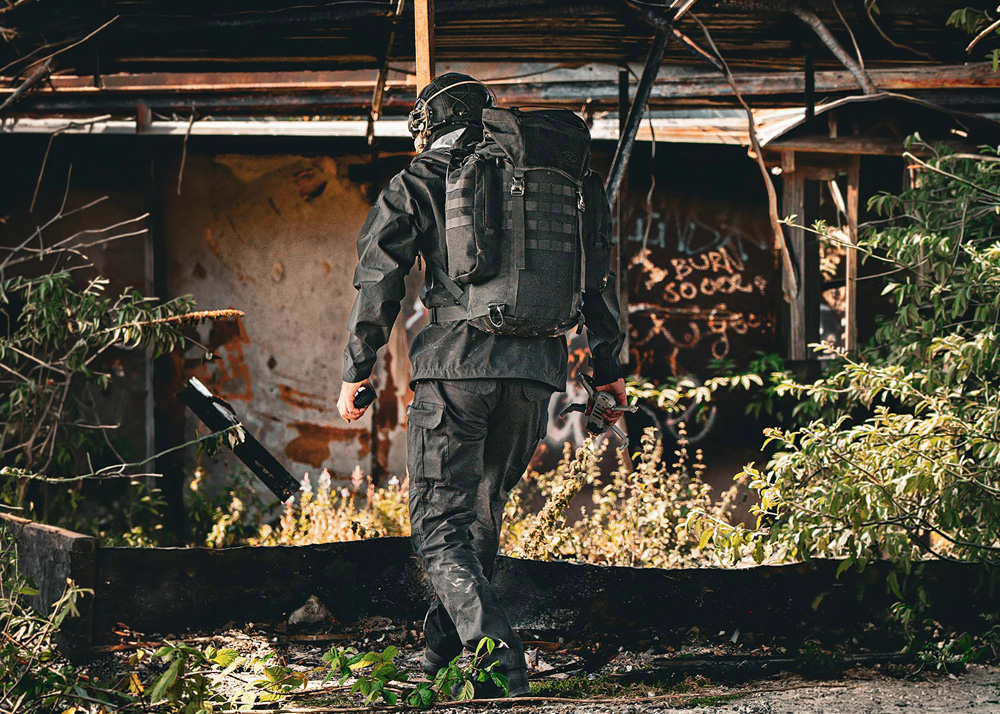
The first wave of Kin No Yuri operatives arrived via submarine in Maharlika, undetected by Lakandula government forces. These operatives, who are more popularly known in the western media as Private Military Contractors (PMCs), are highly trained mercenaries who have seen action in the Middle East, Africa, and South America and who only offer their services to the highest bidder. They are formerly Special Forces operators from various nationalities, who after service, went into private practice. To the Kin No Yuri, they are Ronins, who know no master, but would provide service if treated and paid well. It was not a problem for the organisation as they have what remains of the Yamashita treasure that were spirited to Japan during the war plus the modern resources of the Japanese Zaibatsus supportive of the Kin No Yuri’s goals.


In no time, the Kin No Yuri was able to set up a training regimen for the Timawas, with regular submarine supply runs for weapons and materiel via Morales's gunrunning activities, which is a vast network that covers the world. In areas where the Timawas control, they set up civic activities aimed at improving the lives of the people, leading to more recruits for the rebels. With an improved rebel army that is in high morale, a supportive population in areas they control, Miranda deemed it time to reignite the insurgency. From the Bayanihan mountains, they mounted ambuscades and raids on outlying government outposts. The improved guerilla tactics of the Timawas proved effective in wearing down government forces in the mountainous countryside of Maharlika, leaving President Lakandula in control of only the lowlands. Of course, the real objective was not lost to the Kin No Yuri, which has started exploring the Bayanihan mountains in search for Yamashita’s lost treasure.
The numerous small victories of the Timawas emboldened Miranda who, with the blessings of his Kin No Yuri advisers, decided to launch his first major attack. The plan is to capture the large port city of Urduja, in the northern part of the island. If they capture and hold Urduja, large quantities of weapons and more Kin No Yuri operatives can pour in to sustain a major offensive that would lead to the overthrow of President Lakandula. For the Kin No Yuri, this is a welcome development, since most of the areas they need to explore are still under the control of Lakandula’s forces. A major push in the plains will clear the way for them to search for clues leading towards the recovery of the sword of Yawata no Kami. For Morales, it's an even greater reward with more money expected to pour in with additional orders for weapons. For Miranda, it's for personal glory and freedom for his people.
The attack on Urduja happened in the early hours of the morning. Timawa infiltrators were able to neutralize all guards in the entry points leading to the city. Miranda, who came prepared for his first major showdown with Lakandula’s forces, was surprised to encounter only light resistance by government forces. However, resistance became heavy as rebels made their way to the port area, which is considered vital to both the Timawas and the government. By noon, the rebels were able to capture the port area after government troops to gave up and escaped by sea. The plan of government forces to render the port useless was aborted by Timawas partisans who were able to disarm the explosives that had been placed there by soldiers. Soon after, port operations resumed to receive a ship that had been waiting at sea to bring in more weapons and men from the Kin No Yuri and Morales. The Timawas could now build up its forces as Urduja has a lot of warm bodies to offer, being the largest city in Maharlika’s northern region.

***
Stung by the Timawa victory in Urduja, President Lakandula ordered Maharlika’s ambassador in Washington D.C. to seek additional military assistance from the United States. Tied down by its commitments in Iraq and Afghanistan, the Pentagon could only offer a few Special Forces advisers and materiel and a promise to do whatever they can to help address the situation in Maharlika. Alarmed by Washington’s inability to help him deal effectively with the Timawa threat, President Lakandula called for an emergency meeting of the Southeast Asia Treaty Organisation (SEATO), a moribund mutual assistance treaty that binds member-states of the Association of Southeast Asian Nations (ASEAN) and the United States. All members are to provide military assistance in case a member country is in danger of being overrun by foreign military forces or by internal rebellion. The last known case where the mutual assistance treaty was invoked was during the Vietnam War.
After several days of intense debates, the SEATO foreign ministers, voting 10-2 with Vietnam and Myanmar opposing, voted to send reinforcements to help the Maharlika government deal with the Timawa threat. The United States promised to provide intelligence and technology to assist the SEATO forces. Within a week, the first SEATO troops were already in Sulaiman, Maharlika’s capital and were immediately deployed in support of President Lakandula forces.


SEATO’s intervention was a reason for worry for both Miranda and the Kin No Yuri. With momentum on their side, they agreed to push harder and advance their timetable by pressing on with their offensive before the balance of forces begin to tilt back towards the government’s favor. In the middle of Maharlika on the opposite side of the Bayanihan mountains from Urduja lies its second largest city, Sikatuna. For President Lakandula, the city’s strategic location makes it the logical staging point for a counteroffensive against the Timawas. For Miranda and the Kin No Yuri, the capture of Sikatuna will pave the way for the capture of other cities in Maharlika and put practically half of the country under Timawa control, thus giving them a wider area to search for Yamashita’s gold and the secrets that would lead to Hachiman’s sword.
***
From the Bayanihan mountains, the Timawas and the Kin No Yuri make their descent towards Sikatuna. Unknown to them, Maharlikan forces with American and SEATO reinforcements are also on their way to Sikatuna.
The first major confrontation between the contending forces is about to begin.