Airsoft Hurts, When You’re Not Careful
Anonymous (not verified)
06 Aug 2008
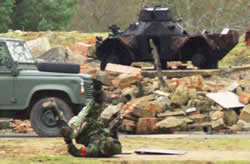
WARNING: Some photographs below are graphic and may upset some people: Airsoft enthusiasts, as with anybody who engages in some sport or leisure activity, cannot be totally free from harm or injury. Much as we might try to protect ourselves from foreseen and potential injuries we can never be 100% certain that we will leave the skirmish site scratch-free after every skirmish. Given that the nature of the sport is the creation or recreation of armed conflicts between two or more opposing teams in either a woodland or urban scenario, an injury to one or more of its participants is not totally uncommon.
When this article was assigned to me it seemed easy enough to do. Just write about what injuries has been reported or I have seen in relation to the sport. However the more I thought about how to tackle or approach this article the more it seemed that I have to be careful about what I write. If I play down all potential and actual injuries suffered, I run the risk of writing a biased/PRO AIRSOFT article. If, however, I write down each and every detail of airsoft injuries—both potential and actual—without highlighting the circumstance as to how and why it happened, I might put myself in bad taste with airsofters or worse it will be the sport that will be in bad standing with the public.
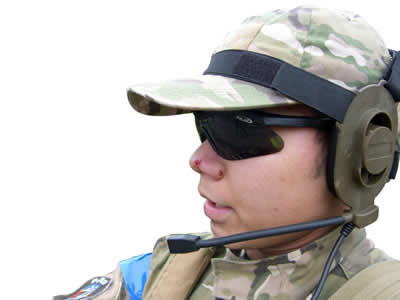
So to come up with an unbiased, unemotional, but fair write-up on the subject, I decided to approach it as a criminalist would a case—take down as much detail as possible and let the facts speak for itself.
Before I continue, I would first like to stress that, although accidental injuries cannot be totally avoided, the wearing of proper eye and face protection, appropriate clothing and footwear may minimize the risk. It is also very important to listen and adhere to the safety warnings and reminders issued by the game site organizers/marshals both prior to and during the games.
So here are the 10 common airsoft-related injuries —based on information collected from airsoft players, Web forums and the Internet in general.
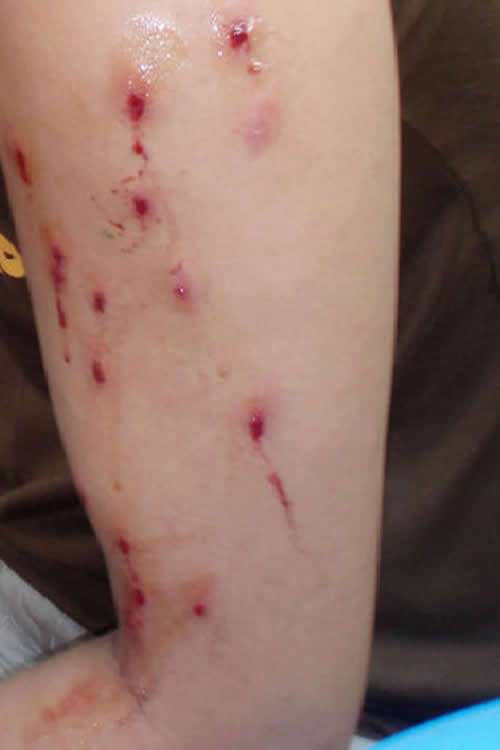
1. Penetrating injuries. In airsoft this is the case of a plastic BB penetrating the skin or any soft tissue. It is important to note that penetration can only be achieved by BBs traveling in excess of 350fps (the velocity of the BB in feet per second). In order to prevent this, and in accordance with legislation and guidelines, most sites here in the UK who chrono AEGs will tolerate 350fps as their maximum limit (legal limit is 1 joule at .20). Pointblank firing is frowned upon.

So where, you might ask, has such an injury been reported? Where else but in the Far East.
In Asia, legislation is only starting to catch up in terms of regulating the sport. So these injuries although still very uncommon have occurred more times there, than here in the UK and other countries where sufficient legislation to protect both the sport and the public in general is in place. It is also of note that in countries such as the United States, most documented penetrating injuries caused by BBs happened not in skirmish sites but in backyards and at home where unsupervised children have been playing with BB guns (not necessarily airsoft guns) without proper protection.
Prevention of this type of injury has a lot to do with each individual player’s attitude. Wearing a full-face mask is always recommended if you play at sites that have an “OPEN FPS” policy (note: subjective). Each player is responsible for his own safety; marshals and game site organizers can only do so much, so responsibility also lies with the player to keep himself safe.
DIY protection gear is not encouraged as protection is always the most important expenditure in airsoft, much more important than buying an AEG. Always buy from manufacturers who have protective gears that have passed stringent standards such as the ANSI Z87.1. There is absolutely no guarantee that your own home-made protection, especially for eye and face protection, will actually protect you.
For injuries to the eyes, it is best to seek medical help immediately. Skin penetrating injuries can easily be dealt with using a first aid kit, which would require nothing more than cleaning the wound with clean water and soap removing the BB and stopping the bleeding. A clean bandage should be placed to cover the injury to prevent contamination, which may lead to infection.
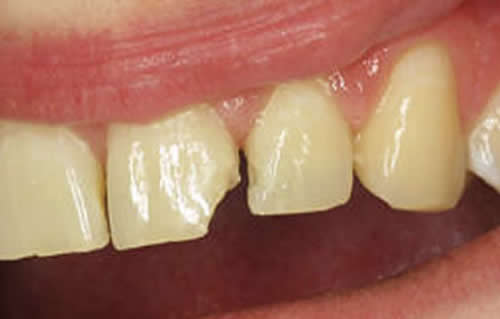
2. Chipped tooth/teeth. Uncommon, but not unheard of either. This has happened more times than penetrating injuries. Although I did say the wearing of a full-face mask is always recommended, a lot of airsofters, myself included, has been guilty of foregoing it in favor of shooting glasses. I agree, they do look much cooler, but then again, being cool does not always equal to being safe. I’m afraid to say that there is no first aid remedy to a chipped tooth/teeth. As everyone will know, a trip to the dentist can be an expensive endeavor—so floss daily, brush your teeth three times a day with fluoride toothpaste, and wear a protective facemask when skirmishing.
3. Bruising. As airsoft is a rough-and-tumble sport, getting bruised is all too common. It does not take much to be bruised during a skirmish day. Improper wearing of heavy load-bearing vests (LBVs) or harnesses without sufficient padding can cause bruising in the skin covering your trapezius (the muscle between your neck and shoulder). Wearing improperly padded webbing belts can also bruise the skin on top of your ilium (hipbone).
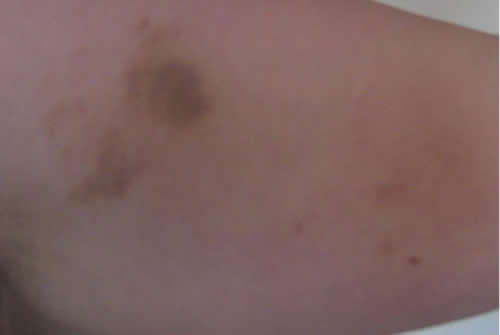
There is no real quick remedy for bruising and the pain accompanied by bruises. Relieving the pressure, rest and time is what it takes to heal this type of injury. So if you find that during the day you’ve been bruised in the areas mentioned above, the best option is to take off your heavy harness and skirmish light for the remainder of the day.
4. Contusion. This can be described as an injury sustained after a blow. It may or may not be accompanied by swelling or bruising, pain is only felt on the injured site, and you can maintain some degree of function to the affected area. These are the instances wherein you hit your elbow on wood or concrete trying to evade enemy fire or hitting your shins on low lying branches or obstacles.
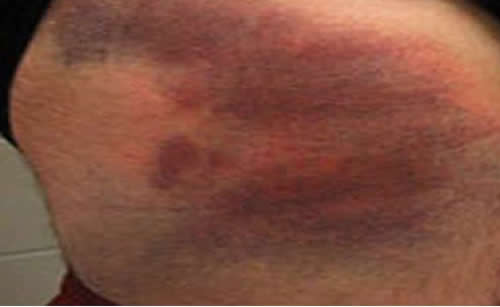
To differentiate between a contusion and a broken bone, if after the injury you are able to go back to the game, then it is more likely to be a contusion. Best first aid treatment for this would be RICE, —no not basmati—Rest, Ice, Compress, and Elevate.
After sustaining the injury, put ice on the affected area. Once the area is cooled (the affected area will have tissue and blood vessels injured, therefore keeping the area cool will prevent bruising and swelling), apply a compression bandage then elevate it to prevent further swelling. You may decide later on either to carry on playing or calling it a day.
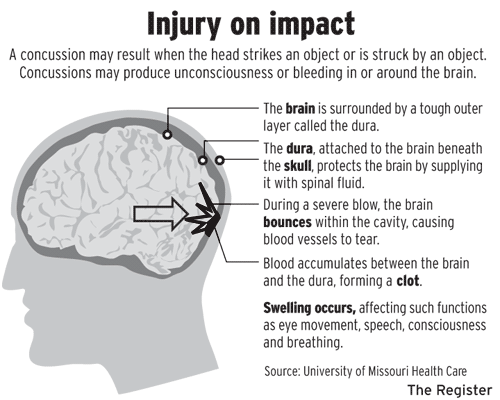
5. Concussion. Is a type of head injury that results in the temporary loss of brain function. It can be as simple as having a headache, to being “dazed and confused” after suffering a blow to the head. Usually concussion symptoms disappear without any form of treatment. These would occur when airsofters not wearing head protection hit their head on any hard object—be it a tree in a woodland area or a concrete surface in urban settings. If this happens, to you or someone you skirmish with, it is always best to inform a marshal immediately in order to be given first aid (some concussions could be strong enough to break skin making a small cut). Medical assistance should be called immediately for more severe concussions, or in the event someone loses consciousness after sustaining a concussion.
6. Allergies, insect bites and bee stings. One of the things that airsoft players like, is being with the elements—the wind; the grass and the trees; the sun and rain; the poison ivies and bees. Okay, maybe not the last two.
Although we do like being out in the open, we just have to be more careful. Every now and then someone does crawl into a patch of poison ivy or gets stung by a bee (or whatever insect is endemic in your area). These always seem to happen to the one who is actually allergic to poison ivy, insect bites or bee stings.
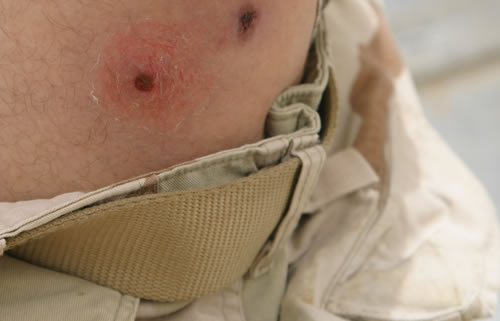
Again, prevention is the key. If you have allergic reactions to poison ivy, for example, make sure you know what it looks like and find out from the marshal or site organizers if there are any within the gamesite. Same as with bee stings (or ant bites). Ask if there have been a number of stinging in your skirmish site. If yes, this indicates that there might be an active hive (or anthill) nearby, so you need to be more careful if you do decide to play anyway.
Treatment for poison ivy is geared towards controlling the itching of the rash caused by coming in contact with the plant. The rash however, in most cases, will not present itself or affect you until after a day or two of coming in contact with the plant. This is a post skirmish condition, but nonetheless airsoft related, as you most likely will not be crawling among the shrubbery except during skirmishing. A good calamine lotion and some antihistamines (anti-allergy medication) will help. The itching and the rash will usually disappear after a few days. However, if the affected area is in the face or if the rashes are quite severe, see a doctor, as you might require some prescription medication or cream.
Bee stings in general do hurt and, unlike poison ivy, you will know straight away if you have been stung. If a bee stings you it is best to have someone remove the sting IMMEDIATELY, not by pulling it out though, but by gently scraping it off. The sting is a self-contained chemical weapon, which releases a toxin/venom. Even after the bee has detached from its sting it still continues to pump toxin/venom. Removing the sting thereby decreases the amount of toxin/venom and lessens the swelling and pain associated with it. First aid remedy to this is to alleviate the swelling and pain. After removing the sting wash the area with soap and water. Apply an ice or cold pack in the affected area. Take anti-histamines or painkillers if not contraindicated. If the pain or swelling worsens or if the affected area changes color, please see a physician.
If you have severe allergic reaction to bee stings or any insect bites that requires you to carry an adrenaline injection, we would strongly advise that you seek your doctor’s advise before engaging in this sport.
7. Sprains and strains. Sprains are injuries to the ligaments (tissues that connect bones to other bones), while strains are injuries to the muscle fibers as a result of over-stretching. Strains are more common than sprains, but for purposes of this list we put these two together.
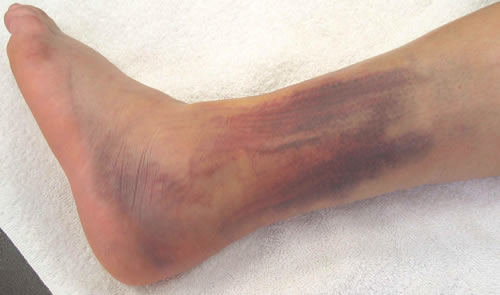
Strains are what we commonly call as pulled muscles. These occur when one engages in a strenuous sporting activity without going through a warm up routine or exercise and stretching. Most common strained areas are the shoulder (lobbing a flash bang), calf (from running or jumping), and the thigh muscle (sprinting to avoid a hail of BBs or from a lobbed flash bang). Sprains occur more commonly on joints like our ankles (sprained ankle due to poor footwear), knees (sudden change of direction when running, bounding up a flight of stairs), and wrists (when breaking a slip or fall or from carrying a heavy AEG). We will again need RICE for this, and no it’s not pilau either—Rest, Ice, Compression and Elevation. RICE applies to both sprains and strains. Whether you continue playing after RICE or not, is up to you. However, if the pain and swelling is quite severe, either immediately or after a few days later, please consult a physician.
Although very uncommon, in the worst case scenario, anyone who will sustain a fracture must be seen and treated by properly trained individuals, so an ambulance will have to be called by the site organizers/marshals, as necessary.
8. Hypoglycemia. This is a condition, more than an injury, wherein your body is running low on its first energy source, glucose.

As most skirmishes start off early, the most nourishment that an airsofter might have prior to the start of the games is a cup of coffee/tea and a donut. This might seem filling immediately after consumption but if you look at how much exertion an airsofter will be doing before lunch, this will not be enough. This condition is first characterized by a feeling of “something’s not right”, which later on would develop into a headache, if unchecked, one might even faint. Fainting can lead to injury if one slumps into a heap on a hard surface. So to prevent this, we must keep blood sugar levels topped up – any sweet or chocolate bar can easily help see one through ‘til lunchtime.
9. Dehydration and electrolyte imbalance. Most people think that one only gets dehydrated in hot or humid places. This is a misplaced belief. Yes we do lose fluids quicker in those conditions but it does not mean that skirmishing in the cold cannot lead to dehydration. In a day, we lose about 250ml of water through breathing—this doubles or triples when we pant during exertion or running. The early symptoms of dehydration may be the same as that of hypoglycemia. It starts off with a feeling of “something’s not right”, which progresses on to a headache, loss of muscle coordination and fainting.

We lose not only fluids, but also electrolytes (substances that contain free ions like sodium, potassium, magnesium, and calcium that help in the functioning of our body systems), from respiration (breathing), perspiration (sweating), and urination. Thus, we have to constantly top these up during the day. It is highly recommended that we drink fluids frequently, and not only when we feel thirsty during skirmishing, to prevent dehydration and electrolyte imbalance. Sports drinks are always a good choice to take with you when skirmishing. It not only prevents dehydration but also keeps ones electrolytes in balance. Being well nourished and hydrated makes for a better skirmish day, not only for you, but also for everyone in general.
10. Minor cuts and scrapes. Any outdoor activity predisposes one to injuries, and airsoft is definitely no exception. Minor cuts are sustained from sharp edged objects like broken glass, broken branches, a sharp rock or stone; while scrapes are sustained by the rubbing of ones flesh either directly or indirectly to a rough surface.
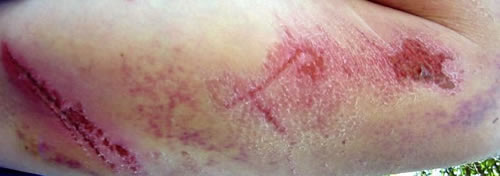
Take for example running past unfinished concrete or brick walls, tree trunks, and the bare earth in general. Minor cuts and scrapes usually do not need a trip to see a physician, however we do need to observe a few things to care for such injuries. No we cannot use RICE for this. The wound must be cleaned with clean water and, if available, with soap as well. Make sure that there are no dirt or debris lodged in the wound. Bleeding must also be stopped. For small cuts, bleeding stops in a short while, if not apply gentle pressure to the wound to stop the bleeding. A clean bandage must be used to cover the cut or scrape, as this will help keep the wound free from contaminants that could lead to infection, because I’m sure you definitely will be going back in the game after the bleeding has stopped.
If a cut does not stop bleeding, it has jagged edges, or the skin will not close by itself, have it checked by a physician. Also, it would be a good idea to see a physician if you have sustained a deep cut and not had a tetanus injection in the last five years.
Reprinted from Popular Airsoft Magazine Volume 1 Issue 2 April 2008.