Enter The Dragon: The Low Bore Axis Pistol From Rideout Arsenal
Logan
11 Oct 2025
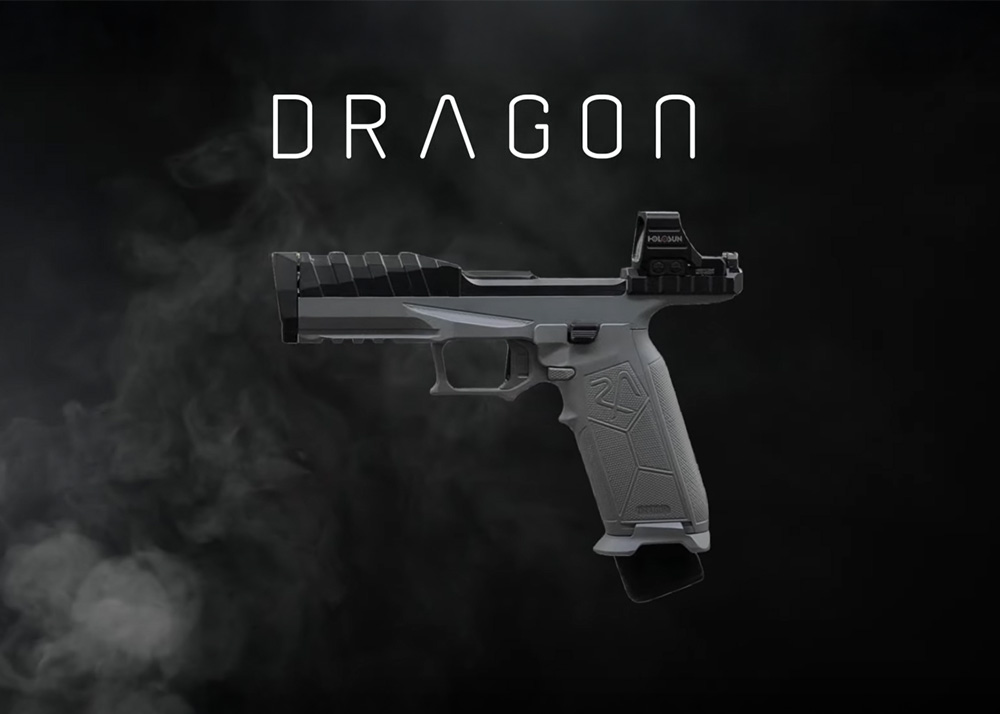
The world of competitive shooting is a perpetual arms race where milliseconds matter. Into this fray stomps the Rideout Arsenal Dragon, a pistol explicitly engineered, according to its designers, to be the fastest out-of-the-box competition rig available. Their thesis? The primary enemy of a quick follow-up shot isn't the recoil itself, but the time spent reacquiring the sight picture after the muzzle inevitably flips skyward. Most conventional handguns perch the bore axis well above the shooter’s hand, creating a lever that imparts a twisting torque—a fancy way of saying muzzle flip—that the shooter must then wrestle back under control. The Dragon seeks to banish this delay through a host of unique design choices.
The innovation here is the ultra-low bore axis. By aligning the barrel directly in line with the web of the shooter’s hand, the Dragon drastically reduces the leverage recoil forces have, essentially eliminating that sight-picture-destroying muzzle rise. This is a fundamental re-engineering of the pistol's geometry. The result is what the designers tout as an astoundingly flat-shooting pistol. And here's the kicker: it achieves this without resorting to the usual trickery of ports or compensators, keeping the package sleeker and the report relatively less ferocious for those on the firing line next to you.
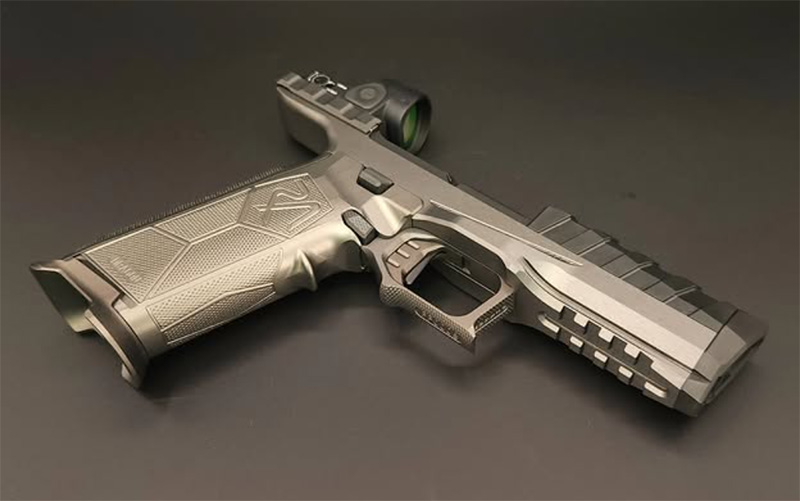
Complementing this design is what the company says is an innovative operating system: the lever delayed blowback. This patent-pending system uses a mechanical lever positioned at the front of the bolt to interface with the bolt carrier. When the round fires, gas pressure pushes on the bolt face, but the lever’s geometry creates a mechanical disadvantage, delaying the bolt's rearward travel. This is crucial—it allows chamber pressure to drop to a safe level before the breach opens. The mechanical linkage ratio smooths out the action considerably, providing a gradual application of the recoil force to the shooter rather than the snappy kick of a standard design. Think less of a punch and more of a gentle, persistent shove.
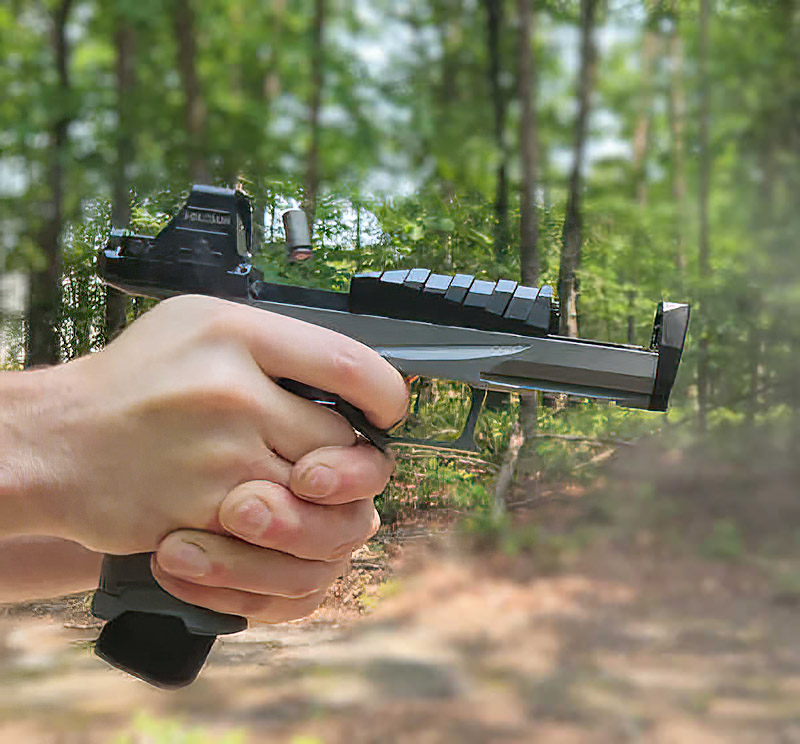
Beyond the smooth ride, the lever delay system boasts a few practical advantages. Because it's a purely mechanical, gas-less operation, the internals run cooler and stay cleaner far longer than systems that bleed gas off the barrel. This also means it's less prone to lead fouling and, theoretically, less particular on ammunition. In other words, the Dragon shouldn't throw a temper tantrum if you feed it a steady diet of cheaper practice ammo—a welcome relief for competition shooters whose annual round count often rivals the national budget of a small country.
The Dragon's design is rooted in modularity and serviceability. The pistol is designed to be extensively user configurable as the product ecosystem grows. Key components like the N-ROC, Grip module, Backstrap, Mag Funnel, and Nose can be swapped out quickly and tool-lessly. Even the Fire Control Group (FCG) is a self-contained, serialized module—the official "firearm" part, according to the ATF—built right into the trigger guard. This modularity means future calibers, grip sizes, and aesthetic variations should be simple plug-and-play affairs.
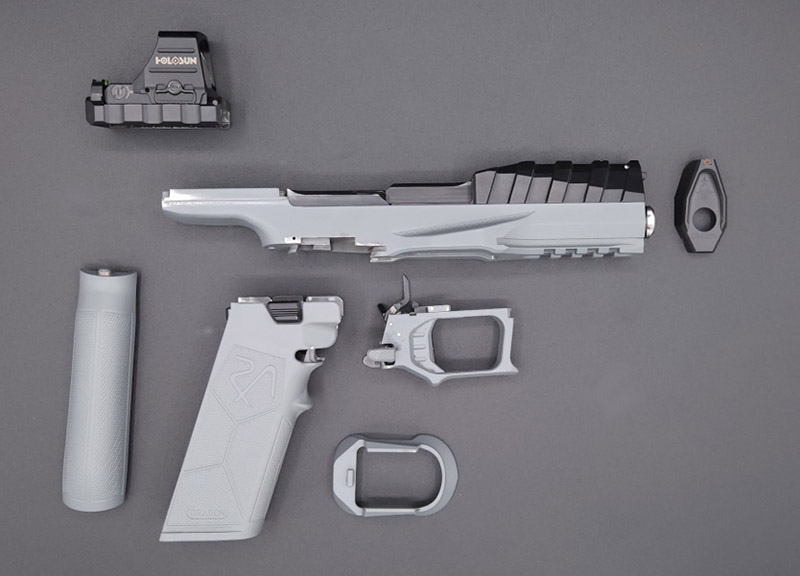
A central, and patent-pending, feature is the N-ROC (Non-Reciprocating Optics Carrier). While most modern pistols mount the optic to the reciprocating slide, the N-ROC fixes the optic firmly to the chassis. This keeps the sight picture stable during the firing cycle, a huge advantage for speed. The beauty of the design is that despite being fixed during firing, the N-ROC still allows the shooter to use the optic itself as a handle to charge the bolt, minimizing the need for competitors to retrain from traditional slide-mounted optics. The system also boasts a True Zero Interface with a wide-railed surface, ensuring a perfect return to zero if the optic needs to be removed and re-installed.
The rest of the pistol is packed with features catering directly to the competitive crowd. The fixed barrel aids in inherent accuracy without the need for custom, hand-fitted tight-tolerance moving parts. Up front, the Quick Detach Nose attaches to the barrel via a tri-lug interface, allowing rapid, tool-less swaps for suppressors, different sight variants, or tunable weight modules. The chassis itself incorporates large, bilateral "gas pedal" thumb rests, ensuring identical handling whether operating with the strong or weak hand. Furthermore, shooters will appreciate the deep trigger undercut and the single-finger swell on the front strap, all contributing to a high, locked-in grip.
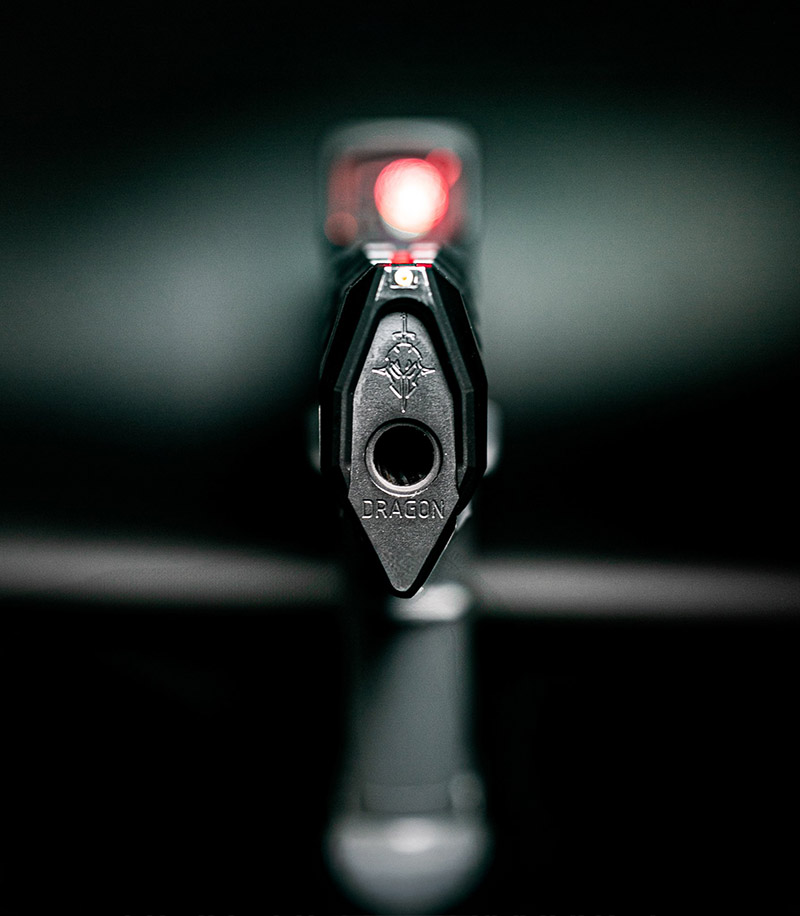
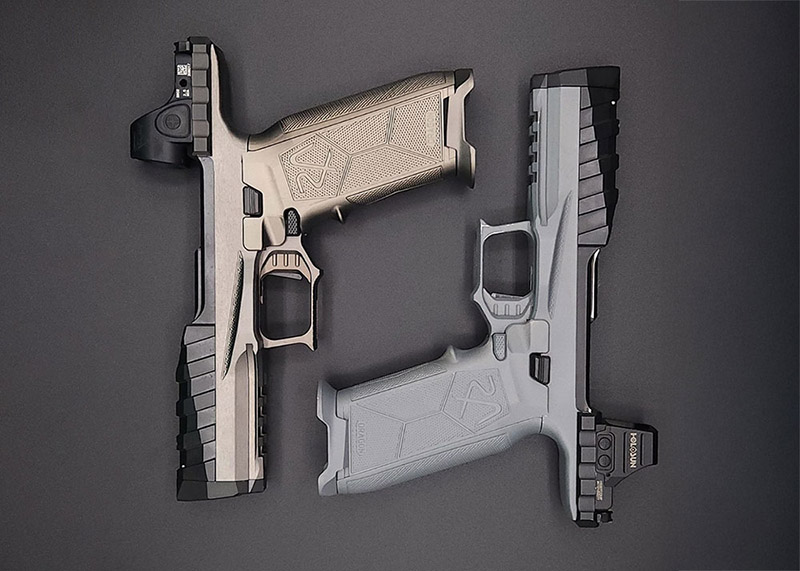
Ergonomics were clearly given a good deal of thought. The grip features a familiar 18-degree angle, a common preference for many shooters, and the backstrap has a prominent hump to promote a high, aggressive purchase. The bolt carrier, which replaces the traditional slide, features deep, full-wrap serrations for easy, non-slip operation of the action. Even the sights are competition-focused: back-up co-witnessed fiber optic sights are built in, with the front sight mounted to the fixed nose and the adjustable rear sight sitting behind the optic on the N-ROC for a rock-solid sight picture.
Now, for the reality check. The MSRP for the Rideout Arsenal Dragon sits at $5,200. This is a formidable financial moment that puts the Dragon squarely in the premium, niche end of the market. You are not just paying for a pistol; you are paying for the culmination of unique engineering, a patent-pending operating system, and a deeply modular platform. For the serious competitive shooter who demands every possible edge to shave fractions of a second off their time, that value proposition may well land. For the rest of us, it remains a magnificent—if somewhat eye-watering—piece of engineering.