FLIR Bags DARPA Contract To Develop Protective Fabrics For The PPB Program
Logan
14 Apr 2021
It may not always be something that airsoft players will think of in terms of putting a cool loadout together but the militay invests heavily into Personal Protective Equipment (PPE) as they are expected to cope with bio and chemical threats. Sometimes we do see some airsoft players role play wearing such PPE for military use depending on the scenario in an an airsoft or milsim event.
When we think of PPEs for bio and chemical protection tasks, we sometimes think of the bulky and hot PPEs. But for DARPA, things are about to change with their Personalized Protective Biosystems (PPB) Program, and FLIR Systems has been tapped to lead in developing the fabric for the next generation PPE.
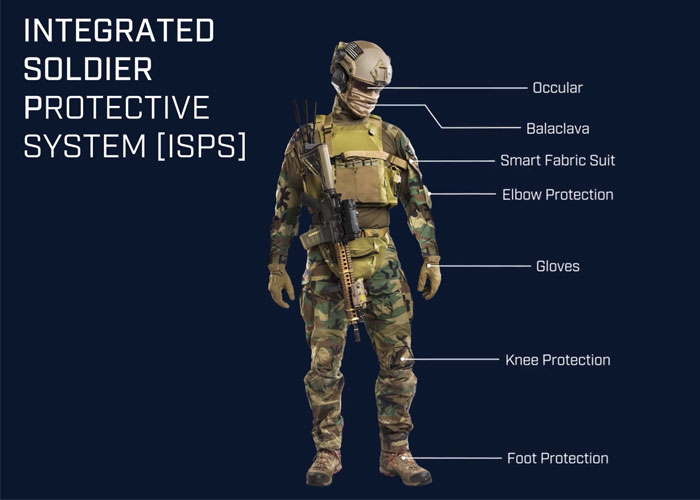
The contract, which is worth US$20.5 million, will see FLIR Systems and partners develop the fabric that can be used protective boots, gloves, eye, and body suits which is called the ISPS or the Integrated Soldier Protective System that will then be tested by government laboratories. The fabric is not only made for battlefield protection, but can also be for first responders and health workers.
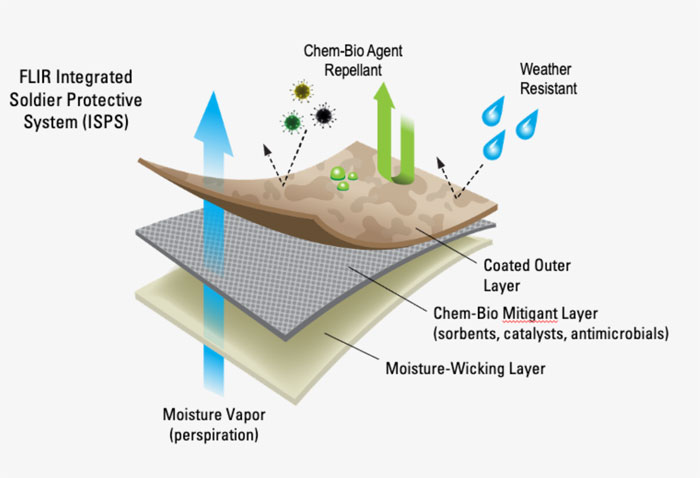
FLIR will be conducting the development at its Pittsburgh facilities in the U.S.A. and this contract includes a two-year base period with a two-year first option and one-year final option period. A US$11.2 million funding has already been made available as initial research funds.
More details in the press release below:
FLIR Wins DARPA Contract Worth Up to $20.5M to Develop Revolutionary New Protective Fabrics for Chem-Bio Defense
Personalized Protective Biosystems (PPB) Program Will Create Fabrics with Built-In Ability to Fight Chemical and Biological Agents, from VX to Chlorine Gas to Ebola Virus
ARLINGTON, Va., April 12, 2021. FLIR Systems, Inc. (NASDAQ: FLIR) announced it has won a contract with the Defense Advanced Research Projects Agency (DARPA) to rapidly develop novel fabrics with embedded catalysts and chemistries that can fight and reduce chemical and biological threats upon contact. The revolutionary fabrics will be incorporated into protective suits and other equipment such as boots, gloves, and eye protection that can be worn by troops on the battlefield, medical experts, healthcare workers, and more. FLIR received $11.2 million in initial funding for the potential five-year effort worth up to $20.5 million, including options.
The goal of DARPA’s Personalized Protective Biosystems (PPB) program is to reduce the substantial weight and physiological burden of current Personal Protective Equipment (PPE) so soldiers and other specialists can better perform their tasks. PPB will combine novel, lightweight protective materials with new prophylactic medical technologies that mitigate chemical and biological threats at vulnerable tissue barriers, notably the eyes, skin and lungs. The complete system will enable troops and first responders to operate without the burden of carrying and wearing PPE, which can cause heat stress and reduce time spent completing the mission.
“With lives at stake, future operators wearing PPB suits will gain a major edge in staying protected from toxic chemicals and emerging biological threats such as dangerous viruses,” said Mark Stock, VP and general manager of the Sensor Systems business at FLIR. “We’re honored DARPA has chosen us to lead this extraordinary and highly innovative effort to develop first-of-its-kind protective fabrics for our nation’s warfighters, health and public safety officials.”
FLIR and its teaming partners will develop a prototype fabric material, the Integrated Soldier Protective System (ISPS), for testing by government laboratories. Work will be performed at FLIR facilities in Pittsburgh. The ISPS award consists of a two-year base period, two-year first option, and one-year final option. The result after five years will be a suite of prototype protective fabrics and garments ready for transition to a program of record with the U.S. Department of Defense.
FLIR safeguards people and property by providing tools that see and sense harmful Chemical, Biological, Radiological, Nuclear, and Explosives (CBRNE) substances. For more on FLIR Systems’ threat detection products, visit www.flir.com/threat-detection/.