Henry’s Golden Boy & Big Boy Revolvers Get The Deadeye Upgrade
OptimusPrime
17 Feb 2026
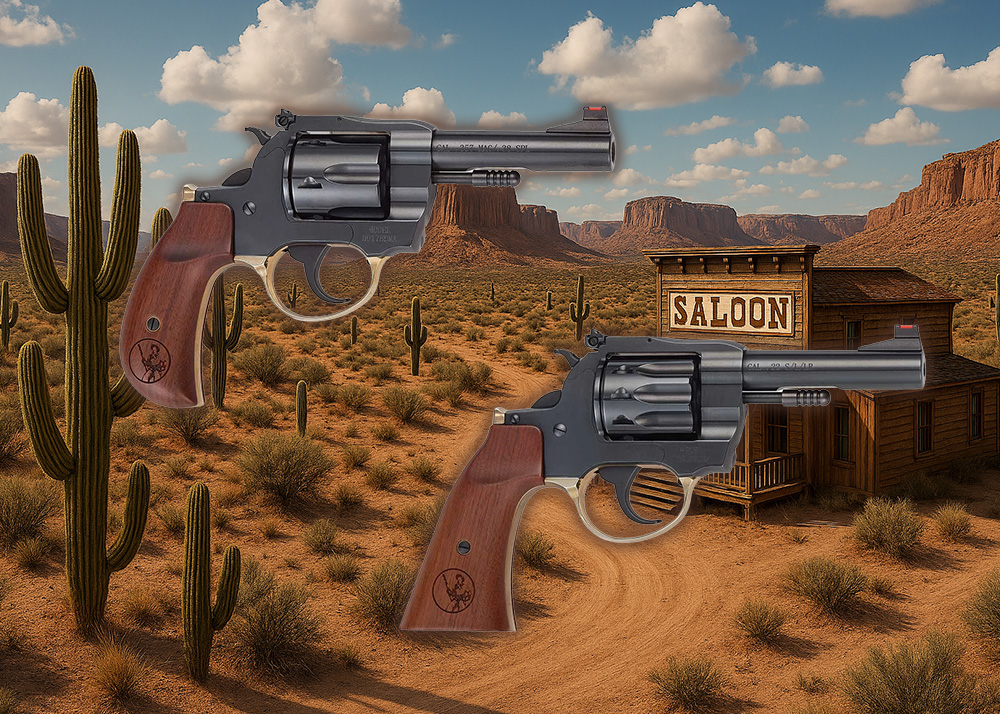
It appears Henry Repeating Arms has been reading their mail. In a move that proves listening to your customers is usually more profitable than ignoring them, the company has expanded its handgun lineup with the H16 Golden Boy Deadeye and the H17 Big Boy Deadeye. This improvement of the standard models is designed for those who prefer hitting what they’re aiming at without needing a magnifying glass.
The "Deadeye" moniker refers to a specific hardware upgrade: the sights. While the original Henry revolvers leaned heavily into fixed-sight nostalgia, these variants introduce a fully adjustable rear notch and a high-visibility fiber-optic front sight. This change addresses the common grumble among enthusiasts who wanted to fine-tune their point of impact for different loads or lighting conditions without having to use a file on their front post.
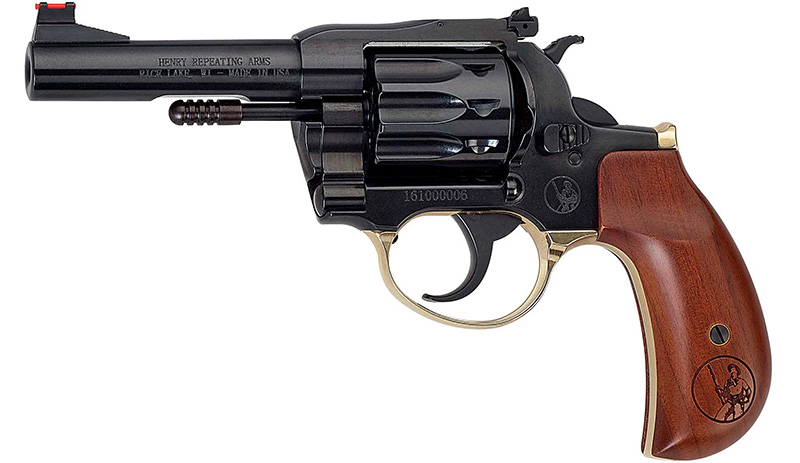
For the rimfire fans, the H16 Golden Boy Deadeye is the main attraction of the update. Built on a medium-sized blued steel frame, it sports the polished brass backstrap and trigger guard that have become the brand's visual calling card. It’s a rimfire handgun meant to sit comfortably in a holster while its larger sibling, the Golden Boy rifle, leans against the range fence. Keeping things domestic, the grips are genuine American walnut, because plastic just wouldn't feel right on a Henry.
Under the hood, the H16 maintains a 10-round capacity and a traditional double-action system. In double-action, the trigger pull is linear and predictable, while switching to single-action provides a crisp break that rewards a steady hand. One of the more practical touches is the quick-takedown cylinder system, which allows you to pop the cylinder out for cleaning without needing a degree in mechanical engineering or a prayer.
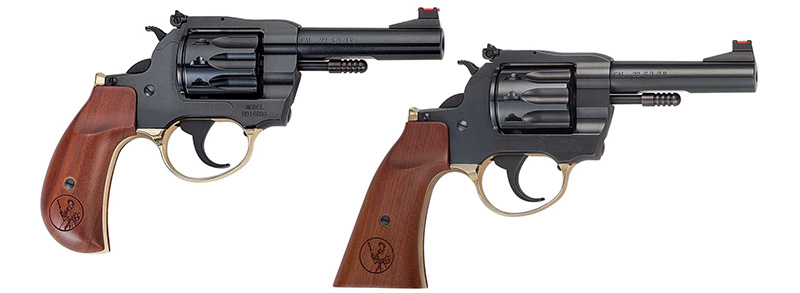
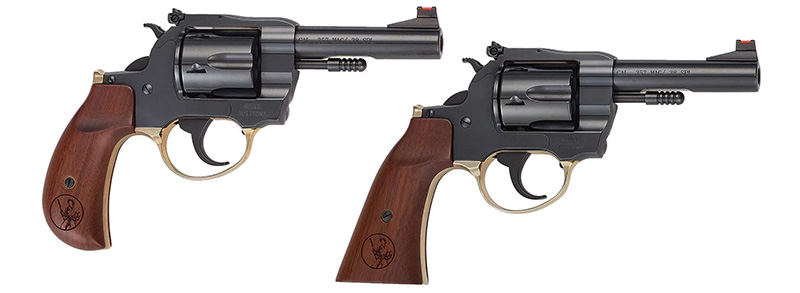
Henry is offering two distinct flavors of grip. The "Gunfighter" style features a squared-off bottom for those who like a full-handed purchase and more control during rapid fire. Meanwhile, the "Birdshead" grip offers a rounded, more compact profile that feels a bit more like something you’d find in a 19th-century card game—minus the cheating and the soot.
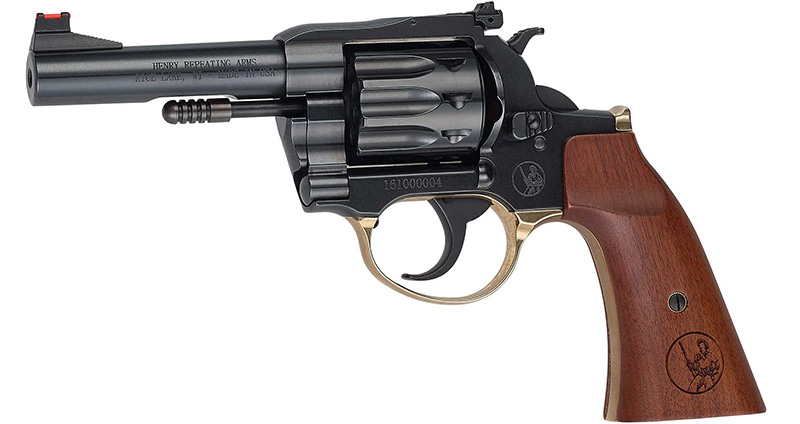
Moving up in power, the H17 Big Boy Deadeye brings these same upgrades to the .357 Magnum and .38 Special crowd. It shares the solid steel frame and walnut furniture of the standard Big Boy revolver but adds the fiber-optic "Deadeye" sight package. At roughly 37 ounces, it has enough mass to soak up the snap of a magnum load, making it a manageable companion for a long afternoon at the firing line.
Historically, the American West was won by people who had the foresight to carry a rifle and a revolver that shared the same ammunition. It saved weight on the belt and mental energy in the heat of the moment. Henry is leaning into this "one caliber, two guns" tradition, positioning the H17 as the natural partner to their Big Boy carbines. It’s a cohesive setup for the shooter who values practical utility and a matching aesthetic.
The internal components of both models are hand-fitted, a process that aims to eliminate the gritty feeling often found in mass-produced revolvers. This attention to detail results in tight tolerances and a smooth action right out of the box. Whether you are punching paper targets or hunting the elusive soda can, the consistency of the hammer drop and trigger reset stays remarkably uniform.

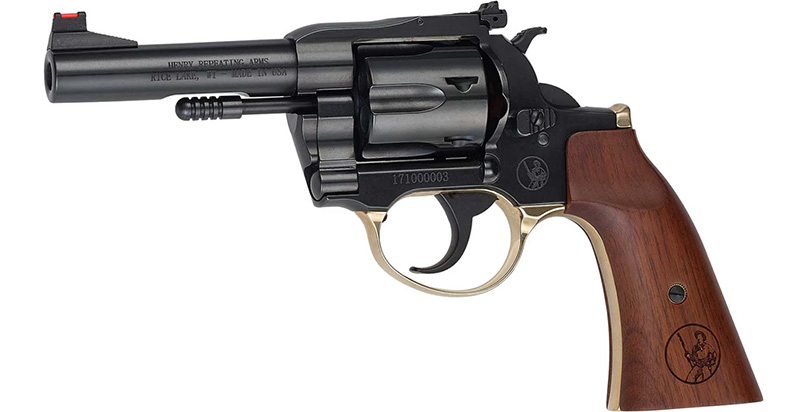
In terms of the "fine print," both the Golden Boy and Big Boy Deadeye variants are priced at an MSRP of $970.00. While that puts them in a competitive bracket, the inclusion of the adjustable sights and the polished brass accents helps justify the entry fee. They are, as is the company’s mantra, Made in America and backed by a lifetime warranty—a safety net that is always nice to have, even if you never intend to use it.
“Listening to our customers is paramount to how we build firearms and decide what’s coming next,” said Anthony Imperato, Founder and CEO of Henry Repeating Arms. “The Deadeye revolvers directly reflect what our customers asked for. They wanted the same revolvers they already enjoy, with more functionality in the sights, and that’s exactly what these new models deliver.”
These two new variants represent a middle ground between "old school" aesthetics and modern shooting requirements. They aren't meant to be museum pieces; they are meant to be shot, adjusted, and cleaned with ease. If you’ve been holding out for a Henry revolver that allows for a bit more precision at the range, your patience has officially been rewarded.