U.S. Army’s New Exoskeleton Lets Wounded Soldiers Walk Themselves to Safety
Gungho Cowboy
01 Jul 2026
Warfare has a pesky habit of happening in places with remarkably poor infrastructure. When a soldier suffers a lower-leg fracture from a gunshot or an explosive device in remote terrain, the standard operating procedure has long involved a canvas stretcher called a litter. The major snag here is arithmetic: moving one injured soldier requires two to four able-bodied comrades to carry them, plus an extra handful to pull security. Suddenly, half a squad is out of the fight, turning a single medical emergency into a tactical vulnerability.
To solve this age-old dilemma, the U.S. Army Medical Research and Development Command has come up with something straight out of a science fiction comic book. It is called the Intrepid Battlefield EXoskeleton, or IBEX. Rather than relying on a frantic rescue squad, this portable, non-invasive brace enables wounded service members to stand up, shoulder their gear, and march themselves to safety.
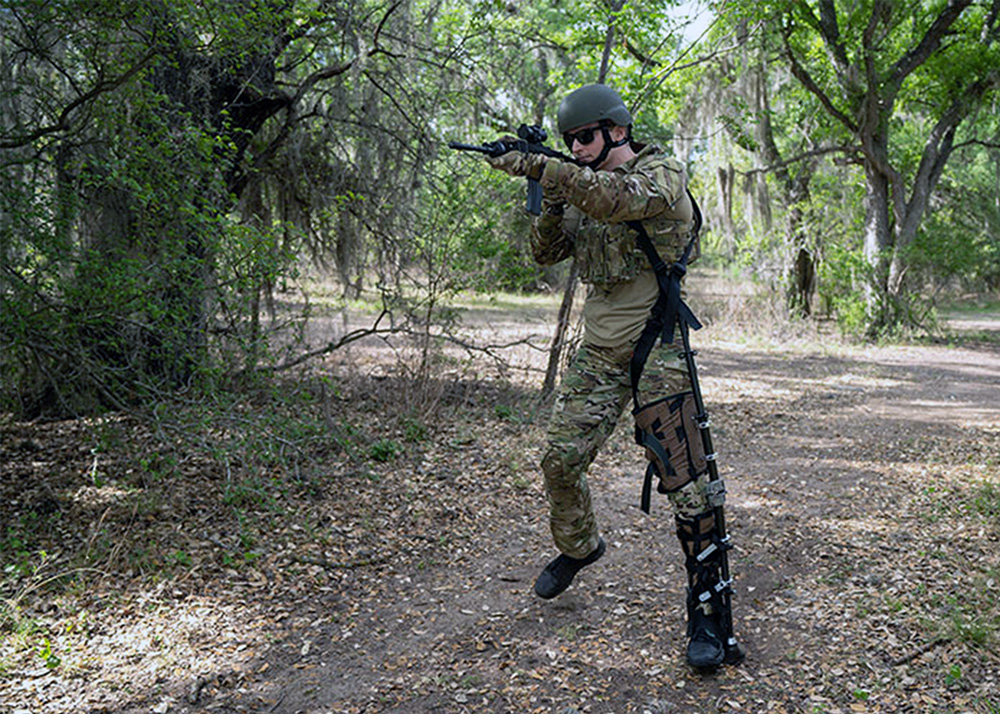
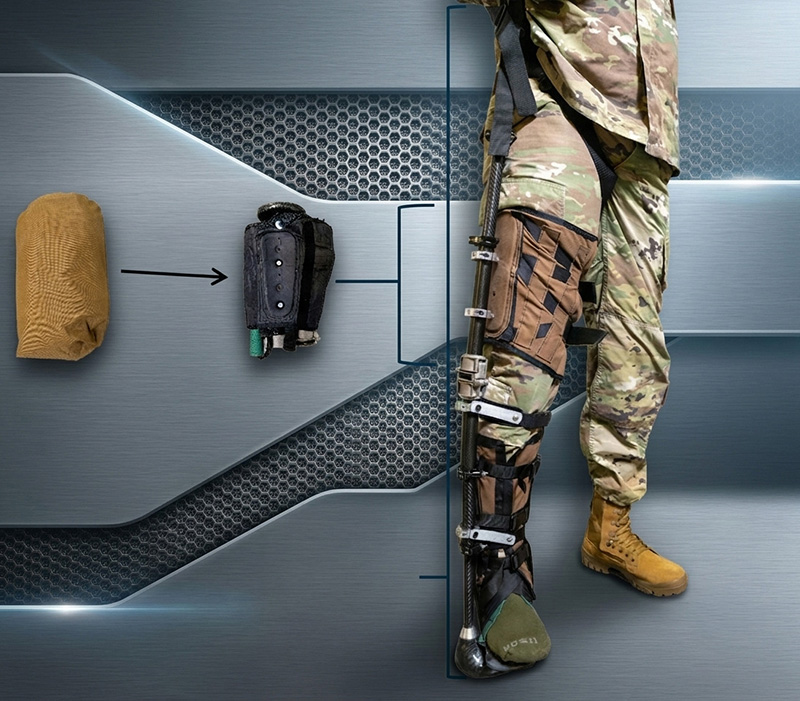
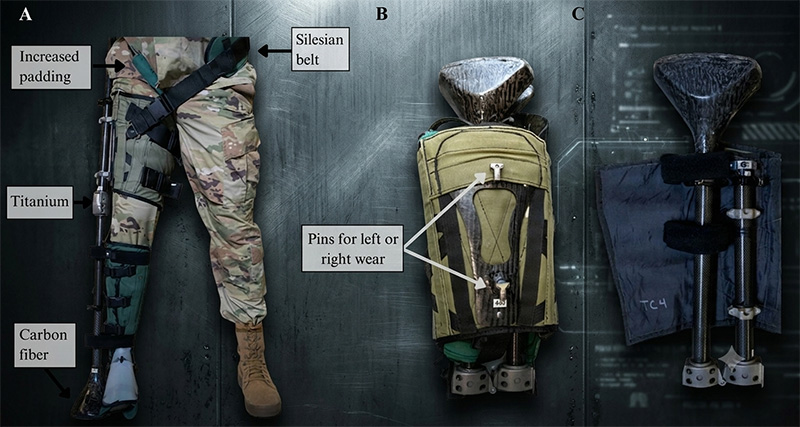
The design of the device is simple engineering applied to a messy problem. The IBEX frame uses a telescoping lateral structure made of carbon fibre and titanium, working alongside a hip harness, a padded thigh corset, a mechanical knee joint, a lower-leg fracture splint, and a curved, rocker-bottom walking boot. By anchoring securely above the fracture, the frame intercepts the wearer's weight and transfers it directly to the ground. The injured limb rests isolated within the frame, which shields soft tissues, nerves, and blood vessels from further harm.
Crucially, the exoskeleton is built for the realities of combat rather than just a quiet hospital corridor. A soldier wearing the system can still drop into a prone firing position to engage the enemy and stand back up without shattering their internal recovery timeline. It transforms a potentially debilitating injury from a unit-halting catastrophe into a manageable hurdle, allowing the rest of the section to keep their eyes on the mission.
Weight is always the enemy of infantry soldiers, who already carry a substantial amount of gear. Fortunately, the IBEX weighs just seven pounds (around 3.2 kilograms) and folds down into a tidy package wrapped neatly inside its own thigh corset. The collapsed unit measures roughly six inches wide, seven inches deep, and fifteen inches long. This means a medic can carry an entire orthopaedic stabilisation toolkit in a space no larger than a standard one-litre water bottle.
If a unit cannot carry one in their packs, the military has evaluated alternative delivery methods. During rugged field trials, a cargo drone dropped the IBEX from a height of 400 feet down to an awaiting soldier on the ground. The prototype survived the impact completely intact, proving that it can be channelled directly to remote mountain ridges, thick forests, or boggy marshes when adverse weather grounds conventional rescue helicopters.
The project began in 2020 and is currently moving through its third round of funding. Engineers have already gone through five generations of prototypes, making the system lighter and more compact with each revision. The technology has caught the attention of commercial partners, who have licensed the design to transition the device from a military project into high-volume manufacturing and broader commercial production.
The project began in 2020 and is currently moving through its third round of funding. Engineers have already gone through five generations of prototypes, making the system lighter and more compact with each revision. The technology has caught the attention of commercial partners, who have licensed the design to transition the device from a military project into high-volume manufacturing and broader commercial production.
"In combat, troops suffer tibia fractures, torn knee ligaments, high-grade ankle sprains, and foot fractures; these are the most common but survivable battlefield injuries. The IBEX enables more walking wounded, which means more warfighters putting bullets downrange while providing a smaller target for enemy drones to attack."
Dr. Lee Childers
Senior Scientist
EACE Military Performance Lab
Center for the Intrepid
Brooke Army Medical Center
While the primary focus is still on supporting troops in austere field-care environments like those seen in recent conflicts across Iraq and Afghanistan, the commercial potential is notable. The device could eventually find a home with mountain rescue teams, wilderness paramedics, or disaster relief agencies that operate well beyond the reach of an ambulance.
Early next year, researchers from the Extremity Trauma and Amputation Center of Excellence will kick off the next phase of rigorous field trials. Testing will take place on the rugged outdoor training grounds near the Brooke Army Medical Center in San Antonio, Texas. If the trials match earlier successes across the Army, Navy, and Marines, the traditional medical litter may eventually become a historical artifact.